


When Ashley’s teenage daughter was diagnosed with an eating disorder, she became something she never expected to be: a parent navigating, and at times challenging, the mental health system. Along the way, she was dismissed as ‘anxious’, watched new diagnoses and medications accumulate, and had to relearn to trust her own instincts about her child. This is her account of what it means to advocate fiercely, listen carefully, and know when something ‘doesn’t feel right’ – even when the professionals say otherwise. To read Ashley’s full story, see link in comments.


Join the Not Broken Project for this thought-provoking webinar: Rethinking ADHD through a Not Broken lens, with Dr Paul Denborough and Prof Jon Jureidini Wednesday 7th October, 6.00pm – 7.30pm Link to register in comments.

In this Not Broken Project podcast, Prof Jon Jureidini explains critical psychiatry – a movement that challenges mainstream psychiatric models, the over-medicalisation of human distress, and the influence of the pharmaceutical industry. In this episode, he goes on to challenge the idea that the explanation for suicide lies in the brain, and explores the powerful social factors that shape despair. A bold conversation that sets the tone for Not Broken. Link to full episode in comments.


At 19, Jess was prescribed an antidepressant for panic attacks. The pills quieted the fear. They also quieted her. She spent a decade numb to her own feelings and disconnected from who she was. Breaking free has come at a brutal price. For Jess’s full story see link in comments.


We’re delighted to welcome Professor Tim Wand to the Not Broken Project Steering Committee. Tim is a professor of nursing and nurse practitioner in mental health with the Illawarra Shoalhaven Local Health District and University of Wollongong. He has worked clinically in emergency mental health care since 2000. Tim’s research, publication and training interests have centered on this field of health care. He has also published on a range of topics such as risk assessment, the use of mental health legislation and psychotropic drugs. Tim specialises in using psychotherapeutic approaches for responding to people in states of acute agitation or mental distress drawn from Solution Focused Brief Therapy, an approach that eschews the traditional fixation on problems, risk, illness and ‘disorder’. Tim brings decades of clinical experience, research and scholarship in emergency mental health care, as well as a strong commitment to exploring how we can respond differently when people are experiencing acute distress. We’re very pleased to have his experience and perspective contributing to the next stage of Not Broken Project. Welcome, Tim. We’re looking forward to the conversations ahead.

Not Broken Project’s Prof Jon Jureidini on Radio 2GB For full interview visit: https://www.2gb.com/show/2gb-afternoons/ Episode: 11 May Segment: 1:43pm–1:56pm


Rethinking ADHD through a Not Broken lens 📅 Wednesday 7 October 2026 ⏰ 6.00–8.00pm (AEST) 💻 Online ADHD is one of the most debated topics in contemporary mental health. In this webinar, we’ll bring together diverse perspectives to explore how we understand attention, impulsivity and hyperactivity – and what those understandings mean for assessment, treatment and support. Hear from some of Australia’s leading experts: Dr Paul Denborough – psychiatrist and Clinical Director at Alfred Health, with more than 20 years’ experience transforming mental health services for young people and a longstanding commitment to strength-based, non-pathologising care. Professor Jon Jureidini – child psychiatrist, philosopher and researcher, whose work has challenged conventional approaches to diagnosis, medication and mental health care and advocated for safer, more ethical practice. Registration link in comments.
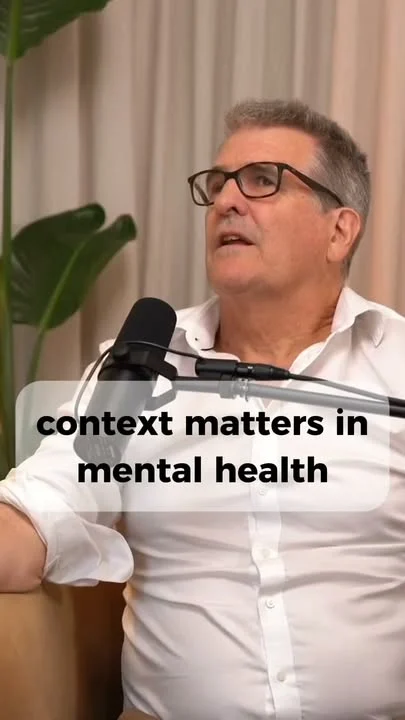
Emotional distress never happens in a vacuum. It emerges from a person’s unique story and the complex circumstances of their life. As Dr Paul Denborough expresses, at Not Broken Project, we want to see a mental healthcare system that meets distress not with preconceived answers, but with questions and curiosity – a system that is less interested in asking, ‘What is wrong with you?’ than in understanding, ‘What is happening for you?’

When Jenny started antidepressants they gave her her life back – until they started taking it away. This is her story of adverse effects, withdrawal, and the long road to reclaiming herself. Read Jenny’s full story at Not Broken Project/Lived Experiences. Link in comments.

Psychiatric drug withdrawal can be an arduous, sometimes agonising, experience that must be done with extreme caution, and wherever possible, with the guidance of a knowledgeable health professional. As Australian psychiatrist, Mark Horowitz explains, the drug effects do not disappear when the drug does.

Not Broken Project’s Prof. Jon Jureidini on Radio 2GB, talks mental health treatment – when medication provides relief, how that relief is achieved, and what informed consent should really look like. Link to full interview in comments.

For years, Ivan was told his pain was purely biological – a life sentence of medication. Only through talking therapy did he discover the truth: healing meant understanding his story, not just treating his brain. For Ivan’s full story, visit Not Broken Project/lived experiences. Link in comments.

This is a not to be missed presentation from Professor Joanna Moncrieff, who will propose that antidepressants should be understood as drugs that change normal brain chemistry rather than correct underlying imbalances, and that we should help and support people who are struggling with emotional problems rather than try and treat speculative brain conditions. Registration link in comments.

What is the basis for psychiatric diagnoses, what role do they play in the treatment process, and are they actually of any therapeutic benefit? Listen to psychiatrist, Dr Sami Timimi on the Not Broken Project podcast: Searching for Normal. Link to full episode in comments.

Barbara thought coming off her antidepressant would be simple. Instead, she was hospitalised twice, and became so unwell that she thought she was dying. This is her story of survival – and of a medical system that never warned her what withdrawal could do. Read Barbara’s full story at Not Broken Project/Lived Experiences. Link in comments.

We’re delighted to announce our upcoming webinar, hosting Prof Joanna Moncrieff, where we will explore the ideas behind her latest book, Chemically Imbalanced. Join us as Prof Moncrieff discusses her research into the serotonin theory of depression, how this narrative became so influential, and what alternative ways of understanding emotional distress might look like. To register, see link in comments.

In conversation with Not Broken Project, Dr Sami Timimi asks – How can we rethink the way we understand, respond to, and care for human distress? For full webinar episode, see link in comments.


Get involved! Registration link in comments

Dr Carolyn Quadrio discusses the differences in how women’s and men’s distress may be expressed, recognised and labelled. What gets diagnosed, and how, can depend on what the distress looks like – and the gender of the person experiencing it. Link to full episode in comments.


When someone seeks help for emotional distress, it’s important that there aren’t complications of medication clouding the picture. As Australian psychiatrist, Mark Horowitz explains, the symptoms of antidepressant withdrawal can appear very similar to those for which the drug is prescribed.

No medication is adverse-effect free, and antidepressants are no exception. In fact, the potential adverse effects of SSRI and SNRI antidepressants can be devestating – both while on the drug and while trying to come off it. As Prof. Jon Jureidini explains, regardless of how many people may feel they benefit from these drugs, because they are prescribed to millions and millions the world over, adverse effects will be suffered by a tremendous number of people. For the full episode of this interview on the Not Broken Podcast see link in comments.

Siswella Lanzillotti is a lived-experience committee member of Not Broken Project. She is a peer support worker whose decade-long experience of compounding diagnoses and medication-first treatment ended in recovery outside the Western mental health system. This is Siswella’s own account of their psychiatric treatment. It is not intended to generalise or represent any other individual’s experience. Photo courtesy of The Age. Photographer: Ruby Alexander

Rebekah Beddoe is a lived-experience committee member of Not Broken Project. She is author of ‘Dying for a cure – a memoir of antidepressants, misdiagnosis, and madness’, which she dedicates to ‘all who have endured the living hell of severe, acute, drug-induced akathisia. This is Rebekah’s own account of her psychiatric treatment – it is not intended to generalise or represent any other individual’s experience. Photo courtesy of The Age. Photographer: Chris Hopkins

What happens when a young person’s difference and distress don’t fit neatly into a diagnostic box? Join the Not Broken Project for a thought-provoking webinar with Caillin Porter exploring the intersection of autism and psychosis in youth mental health services – and the very real consequences of how we categorise what we see. With autism diagnoses rising markedly, and many young people presenting to early psychosis services also showing autistic traits, important questions emerge. Where are the boundaries between difference and disorder? What happens when autistic experiences are interpreted through a psychosis framework? And how do diagnostic labels shape the care – and treatment – young people receive? **Autism and Psychosis: The Flaws of Categorising Difference and Distress** With Caillin Porter. Wednesday 5th August 6.00pm – 8.00pm (AEST) Join us for a critical conversation about diagnosis, interpretation and what happens when complex human experiences are forced into categories that may not fit. Register: https://events.humanitix.com/autism-and-psychosis-and-the-flaws-of-categorising-difference-and-distress

As Australian psychiatrist Mark Horowitz explains, when antidepressants do help, in some cases of emotional distress, it’s not by correcting a chemical imbalance. For full episode: https://notbrokenproject.com.au/media/ The Dangers of Antidepressant Withdrawal and How to Overcome Them


We are delighted to welcome Alicia Martin to the Steering Committee of the Not Broken Project. Alicia is a community pharmacist, Founder of TaperMate, and a passionate advocate for safer, more informed approaches to mental health care. Her work is dedicated to making it easier for people who wish to reduce or discontinue psychiatric medications to access safe, evidence-based tapering support through digital health innovation, clinical care and advocacy. Through her work in pharmacy, Alicia recognised that many people experience significant challenges when trying to discontinue long-term psychiatric medications, often without adequate guidance or support. In response, she founded TaperMate, which now provides pharmacist-led telehealth deprescribing services and digital tools to support safer, evidence-based tapering for people choosing to reduce or stop long-term psychiatric medications in partnership with their healthcare providers. Named UTS Innovative Pharmacist of the Year in 2024, Alicia is committed to expanding the range of evidence-informed options available to people experiencing distress and supporting those who wish to reduce or discontinue long-term medication safely. Her advocacy has also driven national conversations about improving consumer information for antidepressants so people can make more informed decisions about treatment, including understanding withdrawal effects and evidence-based tapering. At Not Broken Project, we believe that transforming mental health care requires diverse perspectives and the courage to question assumptions. Alicia brings expertise, innovation and a deep commitment to informed choice, evidence-based practice and person-centred care. Please join us in welcoming Alicia to Not Broken Project. We are thrilled to have her alongside us as we continue working towards a mental health system that recognises people are not broken.

People can’t give informed consent without informed information. At the Not Broken Project we’re not pro-medication, nor are we anti-medication. We’re pro-informed choice. As Dr Paul Denborough explains, people deserve access to the full picture when making decisions about mental health treatment.


Have you experienced being misunderstood by the Australian mental health system? Have you received poor information about treatment, had medication side effects misinterpreted as worsening symptoms, or been given a diagnosis that doesn’t fit your experience? The Not Broken Project is creating a space for people to tell their stories and help shine a light on the way emotional distress is currently understood and responded to in our society. Every story strengthens our work toward more compassionate, informed approaches in Australian mental health. You don’t need to have all the answers. You just have to have lived it. Share your story here: notbrokenproject.com.au/share


Not Broken Project invites you to: Psychiatry and the Difficult Woman, with Dr Carolyn Quadrio Wednesday July 8th 2026, 6.00pm – 8.00pm (AEST) Register here: https://events.humanitix.com/psychiatry-and-the-difficult-woman
A new Australian paper published in the Australian Journal of General Practice examines the evidence surrounding long-term antidepressant use and antidepressant withdrawal. It highlights that withdrawal effects are often underestimated, despite evidence that they can be severe, prolonged and extremely difficult for people to manage. Importantly, as withdrawal symptoms can closely resemble the return of the condition for which they were prescribed, they are often misinterpreted as relapse, reinforcing unnecessary, ongoing prescribing. The paper notes that antidepressants are frequently continued well beyond the periods for which they were originally intended, and that many people currently taking them may never have met the criteria for long-term treatment. It also highlights the disproportionate prescribing of antidepressants to women. The authors are not calling for the elimination of antidepressants. Rather, they advocate for regular medication reviews, informed consent, and a more balanced understanding of both the benefits and potential harms of long-term use. As Australia continues to grapple with rising rates of antidepressant prescribing, this is an important contribution to the conversation. #MentalHealth #Antidepressants #MedicationWithdrawal #InformedChoice


Rosemary Wanganeen is a proud South Australian Aboriginal woman, raised under the policies of the Stolen Generation. She is a counsellor and founder of Griefology. Recognising the profound harm caused by intergenerational suppressed and unresolved grief, her framework reveals how ancestral losses continue to shape contemporary life experiences. She joined us on the Not Broken podcast for this powerful conversation about understanding grief beyond diagnosis, and the cultural lens required to truly see and respond to it. Link to full episode in comments.
A new study has raised questions about the reliability of some of psychiatry’s most trusted diagnostic interviews. For the Not Broken Project, this is an important reminder that mental distress is often far more complex than a diagnostic label can capture. People’s experiences don’t always fit neatly into categories, and understanding the person, their story, relationships, trauma, loss, stress and circumstances matters just as much as identifying symptoms. People are not broken. Context matters.


Join us as a Friend of Not Broken Project and help Grow the Movement The Not Broken Project advocates for a fundamental shift in how Australia understands and treats mental distress — away from a medication-first model, and toward the social, environmental, and developmental roots of human suffering. Friends of Not Broken Project is a space for people to come together to shape, challenge, and grow the Not Broken movement. The group provides advisory input only and does not hold formal decision-making or governance responsibilities. Members act as a bridge between the Project and the broader community by: – Bringing community voice, insight, and challenge into the Project – Sharing ideas and learnings back into networks and communities – Helping the movement stay connected, relevant, and grounded Who Is Part of the Group We aim for diversity of experience, identity, and perspective, recognising that no single voice represents all. The group brings together people with: – Lived and living experience of distress and where that distress has been over-medicalised – Practice, professional, or community knowledge – A shared commitment to the values of the Not Broken Project Follow the link for more information and to sign up:


Social prescribing offers GPs an alternative to medication prescribing when faced with a person experiencing emotional distress. It favours a collective approach to mental health – honouring a person’s medical needs while embracing the powerful medicine of community, connection, and social engagement. Formalised in the UK for a number of years, it’s now on the rise here in Australia. See link to full Not Broken podcast in the comments.


Australian Psychiatrist, Mark Horowitz, had his own battle with antidepressant withdrawal that nearly cost him his life. Hear his full interiew on the Not Broken podcast https://open.spotify.com/episode/3XP0hFytry5gI6wwVylFZY?si=8j1lX69URaKrUTB_-2KV9A
